Books <span class="books-info-icon">i<span class="books-tooltip">I once asked myself the question: if I woke up and all my knowledge was completely wiped from my brain &mdash; I literally knew nothing, and I had to start all over again, what books would I read to build the foundations of my knowledge from the ground up? This question gnaws at me, because it forces one to choose books that are fundamental to your understanding of the nature of reality. Interestingly, most of these were written a long time ago. Here are some of the books I've chosen, while some are so dense I haven't made headway (or I simply got bored reading them). There are also some other books here that I just enjoyed and think are cool.</span></span>

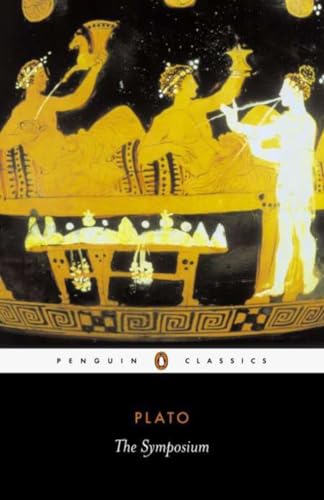
The Symposium

The Symposium

Plato

A discussion on the nature of love. A term which ends up defined as 'wanting or yearning for the good of all of humanity forever' by Socrates.

Goodreads →
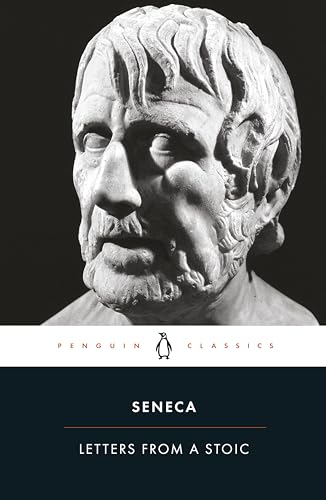
Letters on Ethics

Letters on Ethics

Seneca

I have a warning for you. There are those who wish to be noticed rather than to make moral progress. When we are not doing well, most of life slips away from us. Death is important to keep in mind at all times. A settled mind can stay in one place and spend time with itself. Cheerful poverty is an honorable thing. Persevere in what you have begun.

Goodreads →
Things Hidden Since the Foundation of the World

Things Hidden Since the Foundation of the World

René Girard

Theory of memetics. The banding together of all against a single victim is the norm in culture. Scapegoating serves an important societal function to restore calm. Witches in Salem, shooters, assassins, Luigi Mangione. The community satisfies its rage against an arbitrary victim in the unshakable conviction that it has found the one and only cause of its trouble.

Goodreads →
The Hero With a Thousand Faces

The Hero With a Thousand Faces

Joseph Campbell

All stories, myths, and narratives repeat and reverberate across cultures and time. The Avengers play on ancient characteristics: an unlikely hero faced with a difficult challenge who must overcome some great foe. The hero accomplishes the challenge and returns home transformed. The hero is one of many infinitely recurring myths. The Martyr. The Villain. The Victim. From Baggins to Potter, Jesus to Buddha, Antman to Odysseus. All stories that guide culture have the fundamentally 'same' characteristic.

Goodreads →
Enchiridion

Enchiridion

Epictetus

Stoic philosophy, 90 AD. Some things are in our control, others are not. Our thoughts, opinions, movements, desires, and aversions are in our control, our own actions. Everything else is not. Written 2000 years ago, still the foundation for modern cognitive behavioral therapy.

Goodreads →
The Republic

The Republic

Plato

The greatest metaphysical genius whom the world has seen, this is a dialogue on "What is the nature of justice? What is a just society?" They inquire into how a just society would be organized and derive the idea of a republic from first principles. It becomes clear that ruling is a sacrifice and an obligation. In a just society, good people will choose to rule. Because the penalty for declining to rule is being ruled by someone inferior than yourself.

Goodreads →
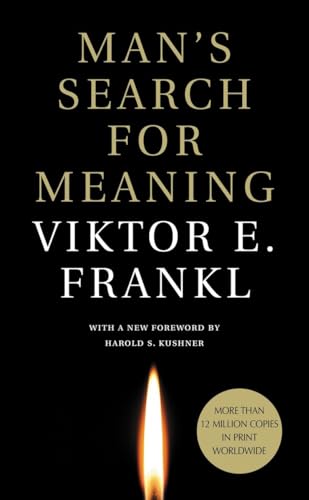
Man's Search for Meaning

Man's Search for Meaning

Viktor Frankl

A Holocaust survivor, and doctor to many patients in Auschwitz. He had a 1 out of 28 chance of living. Instead of losing hope, he restored hope for hundreds of eventual survivors by reminding them of their wives, families, and children they had back home. The books they still had left to write. We discover the meaning of life by taking responsibility for what life asks of us. By creating a work or doing a deed. By experiencing something or encountering someone. And by the attitude we take towards unavoidable suffering. We must never forget that we may also find meaning in life, even when confronted with a hopeless situation. When facing a fate that cannot be changed. What matters then is to bear witness to the uniquely human potential at its best—which is to transform a personal tragedy into a triumph. To turn one's predicament into an achievement. When we can no longer change a situation, like having inoperable cancer, we are challenged to change ourselves.

Goodreads →
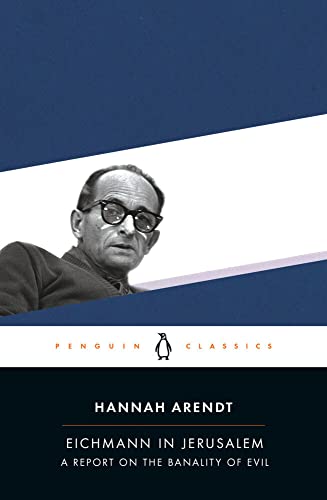
Eichmann in Jerusalem: A Report on the Banality of Evil

Eichmann in Jerusalem: A Report on the Banality of Evil

Hannah Arendt

Hannah Arendt, a German philosopher, describes the testimony of one of Hitler's right-hand men. The point of this is basically to reveal how evil is not committed in some smart or insidious way. Often, it's boring, lame, or banal. Arendt was struck at just how stupid and uninteresting the man who committed these evil acts was.

Goodreads →
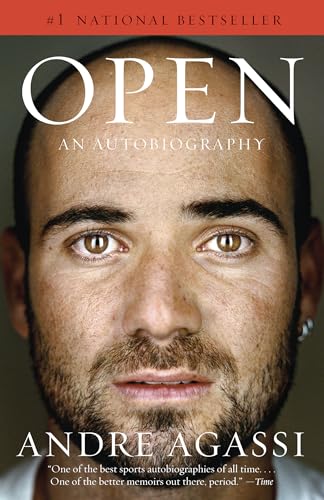
Open

Open

Andre Agassi

Honestly, this one's just an awesome fucking read. Really well-written, punchy, compelling story about his rise as one of the best tennis players of all time. My favorite story is his dad betting $10,000 on a tennis match between him as a 9-year-old boy and a quarterback for the Browns. Which was all of his dad's savings at the time.

Goodreads →
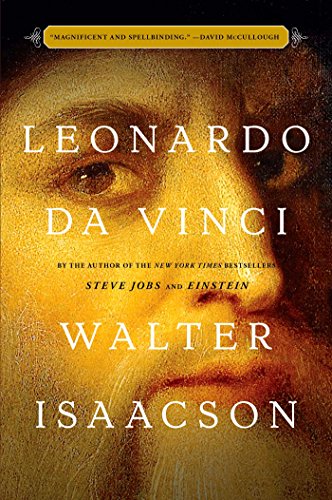
Leonardo da Vinci

Leonardo da Vinci

Walter Isaacson

A guy obsessed with feet, who invented flying machines and machine guns before they existed. Da Vinci famously did his own thing. He never finished some of his most important works. He would get distracted and move on to other things, pissing off his patrons. He was obsessed with birds, with nature, anatomy (veins, blood vessels, bones), geometry, painting, and architecture. A cool read.

Goodreads →
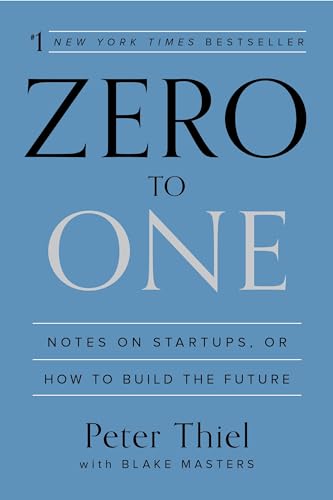
Zero to One

Zero to One

Peter Thiel

Classic banger still holds up. Identify secrets. Build a monopoly. Choose heretical ideas that everyone disagrees with. Etc. etc.

Goodreads →